ViSSee Press

Original English edition

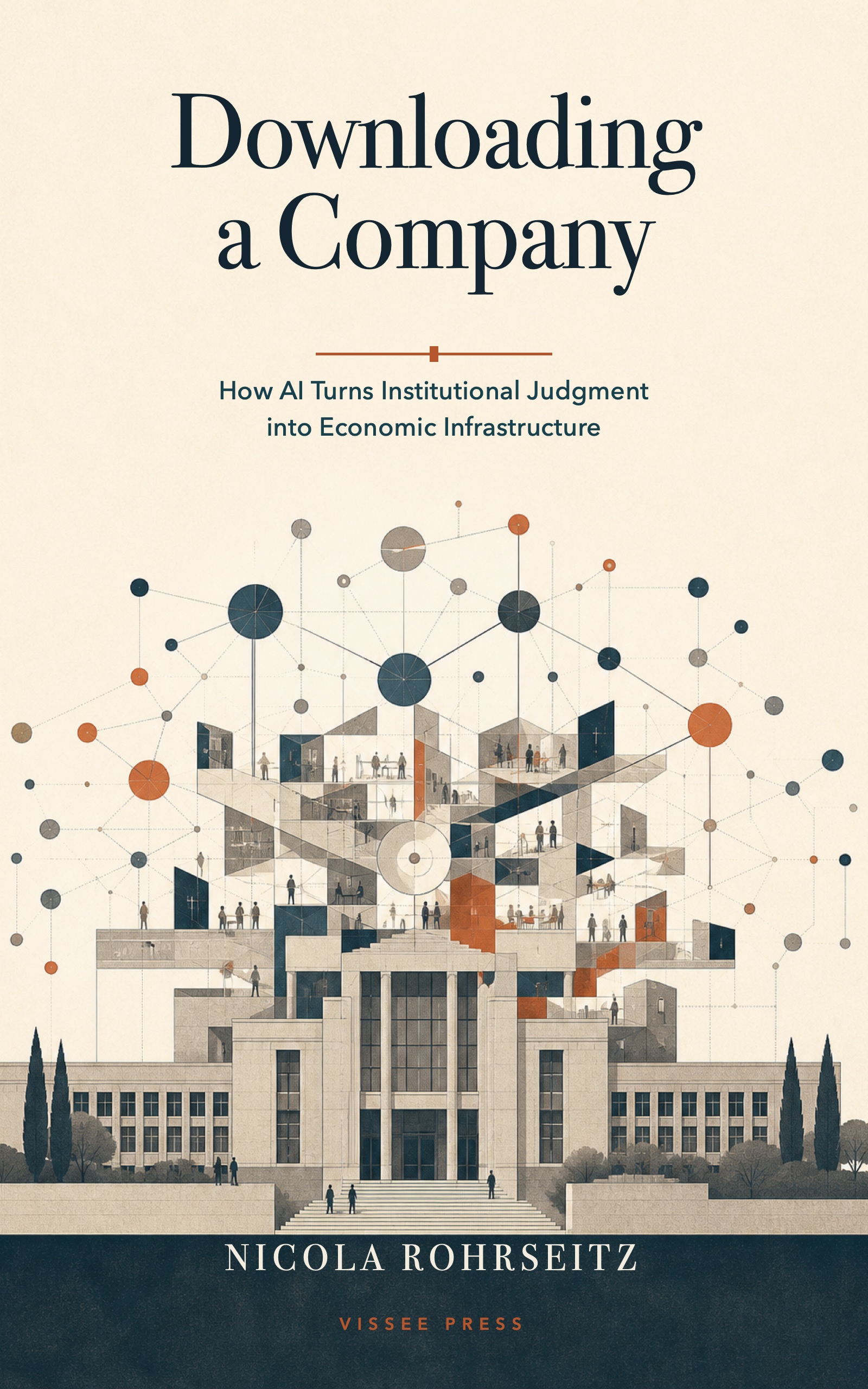
Downloading a Company

How AI Turns Institutional Judgment into Economic Infrastructure

The original English edition presents the argument in twenty chapters; the Italian edition expands it through Italy's industrial and institutional history.

The book

When a company's way of deciding becomes infrastructure.

Downloading a Company examines what happens when organizational judgment, routines, and institutional memory become explicit, queryable, and reusable through artificial intelligence.

Italian edition

Expanded through the Italian context.

The Italian edition tests the argument through the Programma 101, World Class Manufacturing, the Università del Caffè, and the industrial districts of Sassuolo and the Packaging Valley. It is more than a direct translation: it rereads the book through places where economic knowledge moves among companies, people, and institutions.

Contents

Twenty chapters on the downloadable organization.

  1. Downloading a Company
  2. The Company as a Thinking System
  3. Where Institutional Knowledge Actually Lives
  4. The Hidden Fragility of Institutional Memory
  5. Why Software Could Not Encode Organizational Judgment
  6. From Models to Organizational Semantics
  7. The Company Graph: How Knowledge Graphs Capture Company Judgment
  8. When AI Models Absorb Company Judgment
  9. Encoding Institutional Judgment
  10. The Company's Worldview Becomes Executable
  11. Maintaining Institutional Coherence
  12. When Organizational Memory Becomes Machine-Readable
  13. The Myth of Irreducible Tacit Knowledge
  14. Replication Without Expansion
  15. The Transferability of Institutional Cognition
  16. Firms Become Containers of Cognition
  17. Replication Creates Markets for Reasoning
  18. Strategic Advantage Moves to Coherence
  19. Governance of Machine Institutions
  20. The Downloadable Organization

Inside the book

Five figures from the English edition.

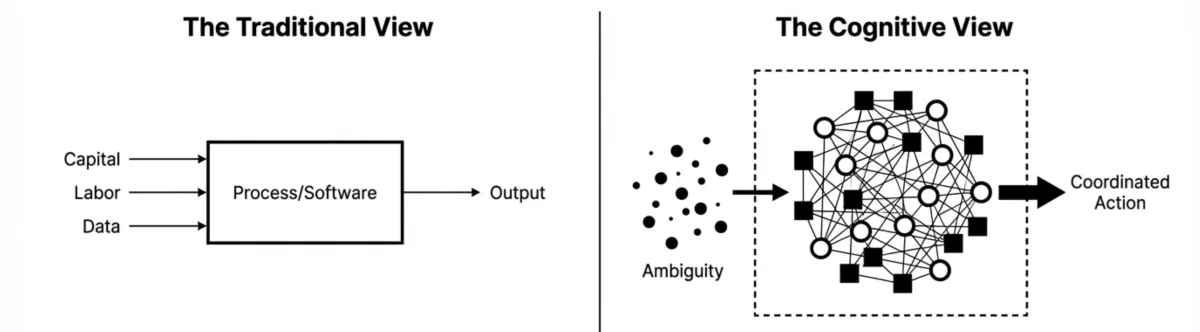
Three inputs pass through a single block in the traditional firm, while varied inputs move through a network of people and nodes in the cognitive firm.
From a traditional firm to a cognitive one.
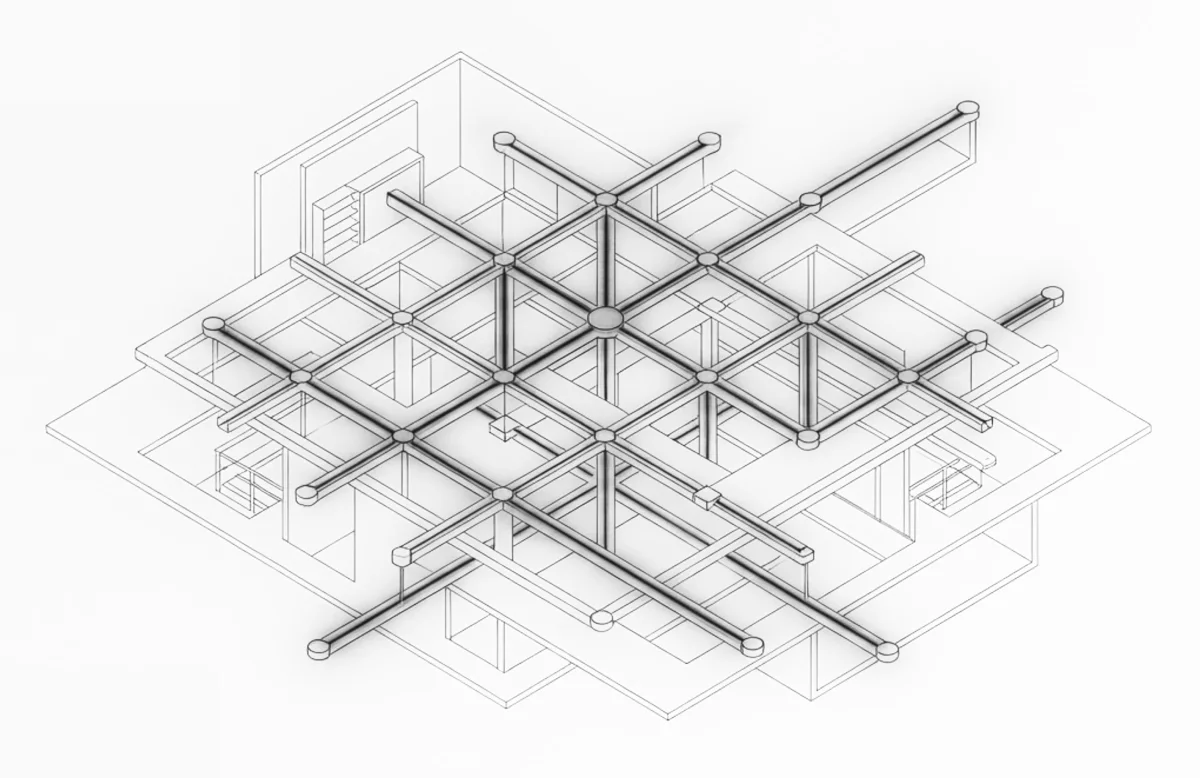
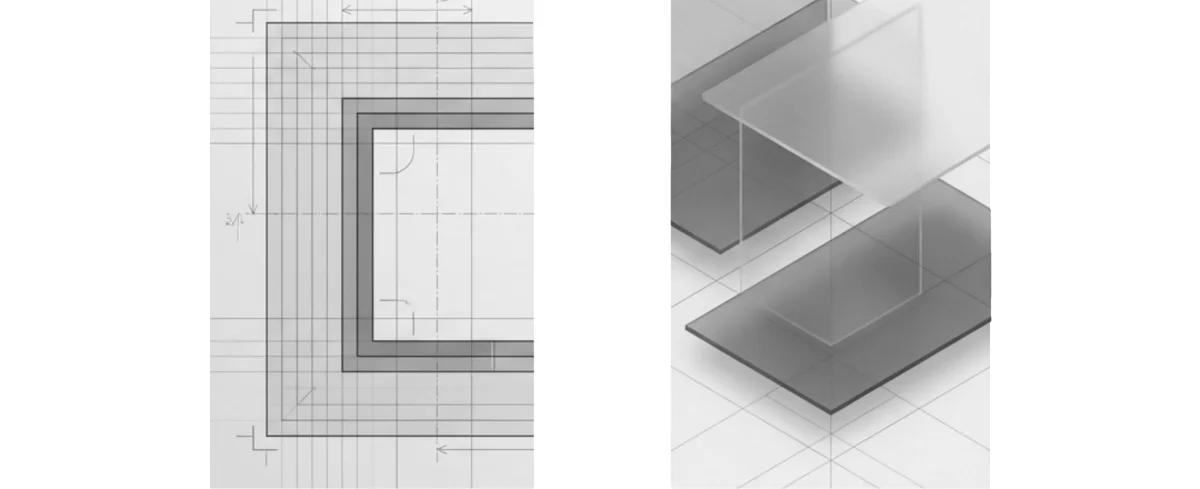
An isometric architecture of interconnected modules, documents, systems, and decision nodes.
The hidden architecture of institutional knowledge.
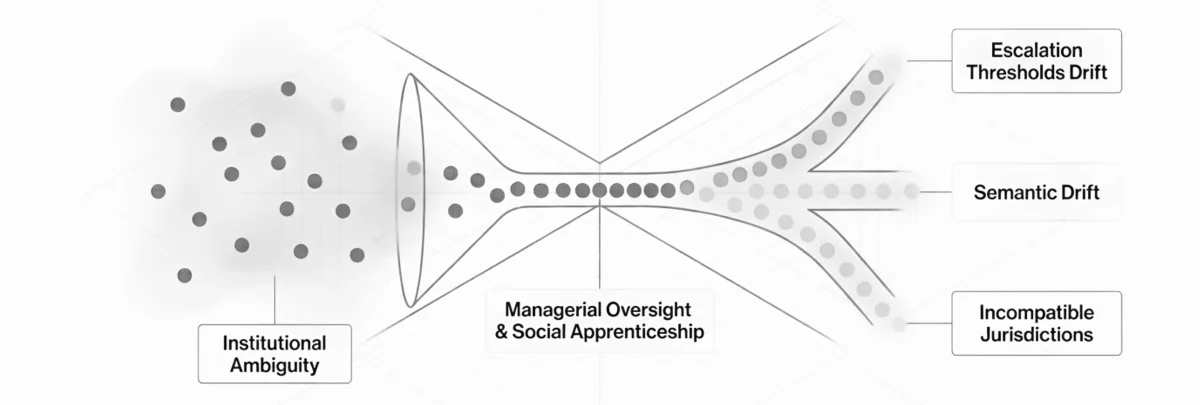
Fragmented signals pass through intertwined paths of interpretation and managerial control.
Managerial oversight under fragmented judgment.
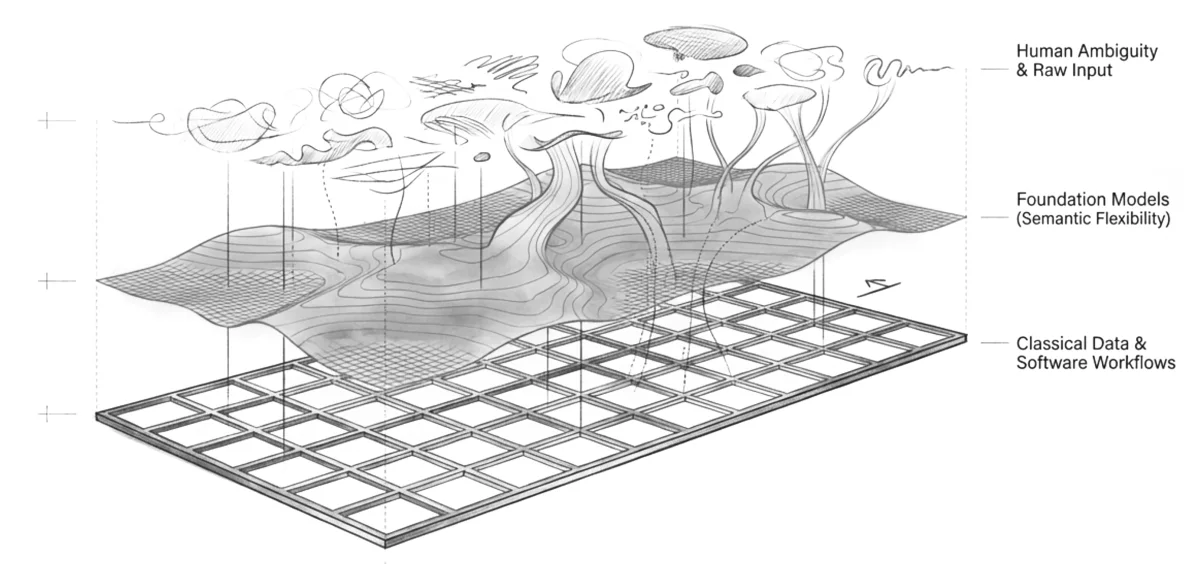
Visual, textual, and audio inputs connect through a semantic layer to archives, tables, systems, and workflows.
A future knowledge landscape in which context becomes executable.
Scattered documents and notes become a structured network of categories, relationships, and queryable records.
The boundaries of machine-readable organizational memory.